
Global Fiber Infrastructure
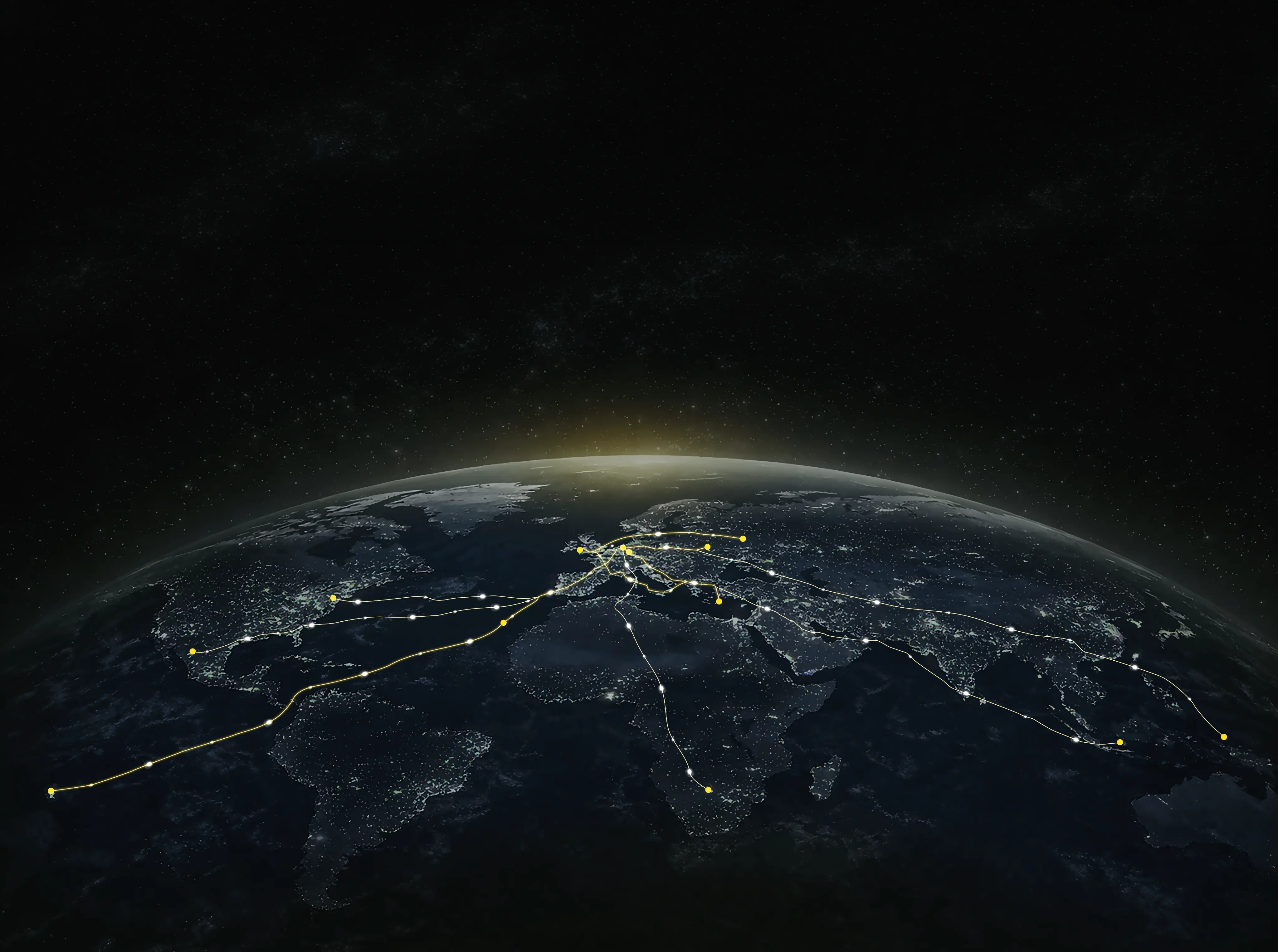
A global DWDM network connects teleports, ground systems, operational sites and data centres through redundant terrestrial infrastructure. Designed for high-capacity data transport and low-latency communications, it forms the backbone of globally distributed communications environments.

The Network Behind Distributed Operations
Satellite communications extend far beyond the teleport. Data continuously moves between teleports, ground systems, data centres and operational environments. Stellar's fiber infrastructure connects these locations through a globally distributed DWDM network designed for high throughput, low latency and resilient data transport.
Global DWDM transport infrastructure
Redundant Layer-2 connectivity
Dynamic routing and multipath strategies
Continuous network monitoring and diagnostics
Understanding Our Fiber Network Architecture
Stellar's terrestrial infrastructure links teleports, ground stations, operational sites and data centres through a high-capacity optical transport network. Together, these interconnected systems form the communications backbone that supports satellite operations and distributed environments.
How the Network Operates
A globally distributed DWDM network transports data between teleports, ground systems and operational environments with low latency and high availability.
Benefits of Our Fiber Infrastructure
Redundant paths, scalable bandwidth and optical transport technologies support resilient communications and operational flexibility.
Built for Distributed Operations
The network is designed for mission-critical communications and geographically distributed environments that require reliable and high-capacity connectivity.
The Terrestrial Backbone of Satellite Communications
Our fiber infrastructure extends beyond individual sites and connects teleports, ground stations and operational environments into a single communications infrastructure.
400 Gbit/s per fiber pair
Optical transmission rates of up to 400 Gbit/s per fiber pair support high-volume data transport.
24/7 Operations
Continuous monitoring and diagnostics maintain visibility across the network, while supporting rapid fault identification.
Infrastructure for High-Volume Data Transport
The network is designed to transport large data volumes across geographically distributed sites while maintaining low latency and operational resilience. Dynamic routing mechanisms and redundant paths allow traffic to adapt to changing requirements and support mission-critical communication environment.
Traffic can be adapted to changing operational requirements and distributed environments while maintaining visibility across the network.
Multipath strategies provide alternative routes and support resilient communications across the terrestrial infrastructure.
Connecting Teleports and Operations
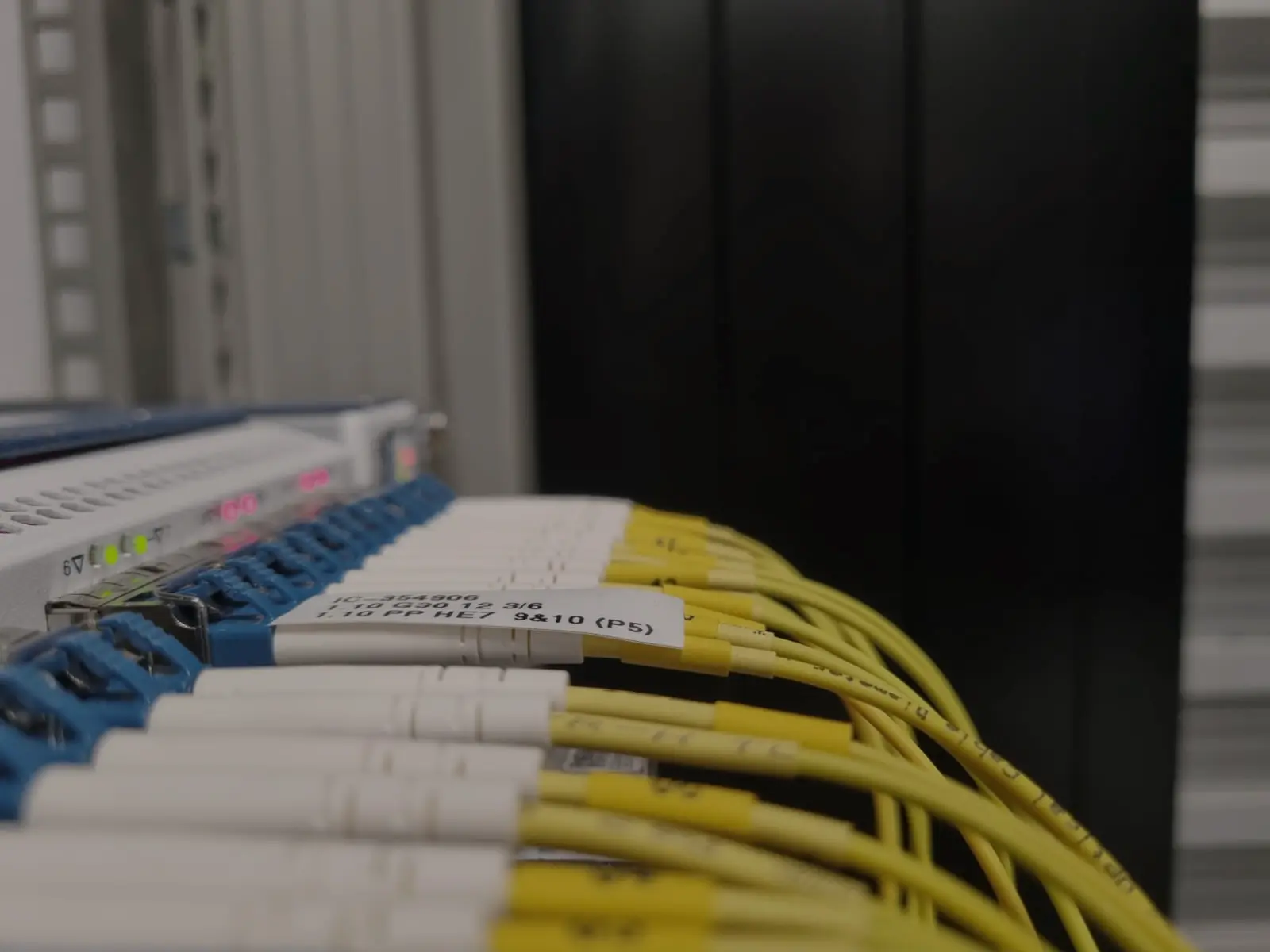
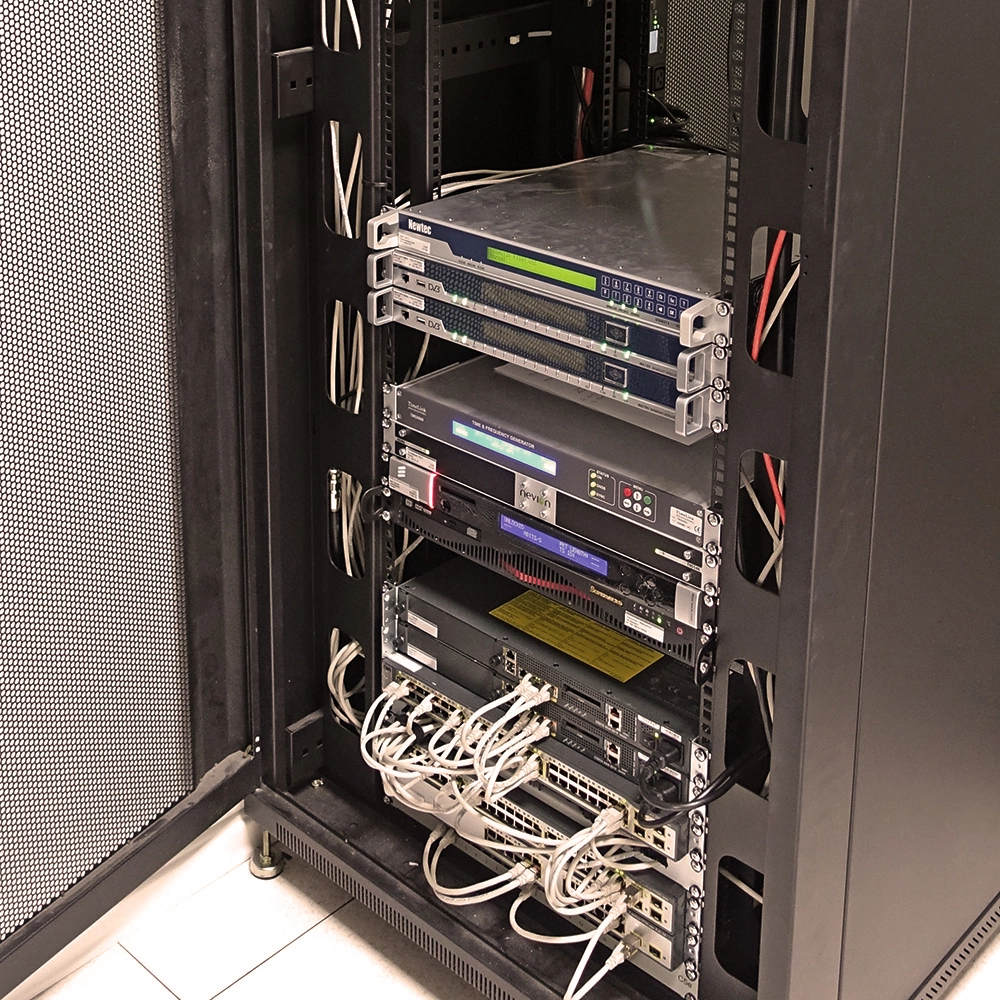
Fiber infrastructure forms the terrestrial layer between teleports, data centres, ground systems and operational environments, enabling high-capacity and low-latency communications across globally distributed infrastructure.